
Eco-friendly and Sustainable Merchandise for Companies
Truly eco-friendly merchandise: items that last for years, materials you can explain, and not a single leftover box in storage. Steel bottles, organic cotton bags, recycled paper and bamboo notebooks with your logo, produced from 25 units.
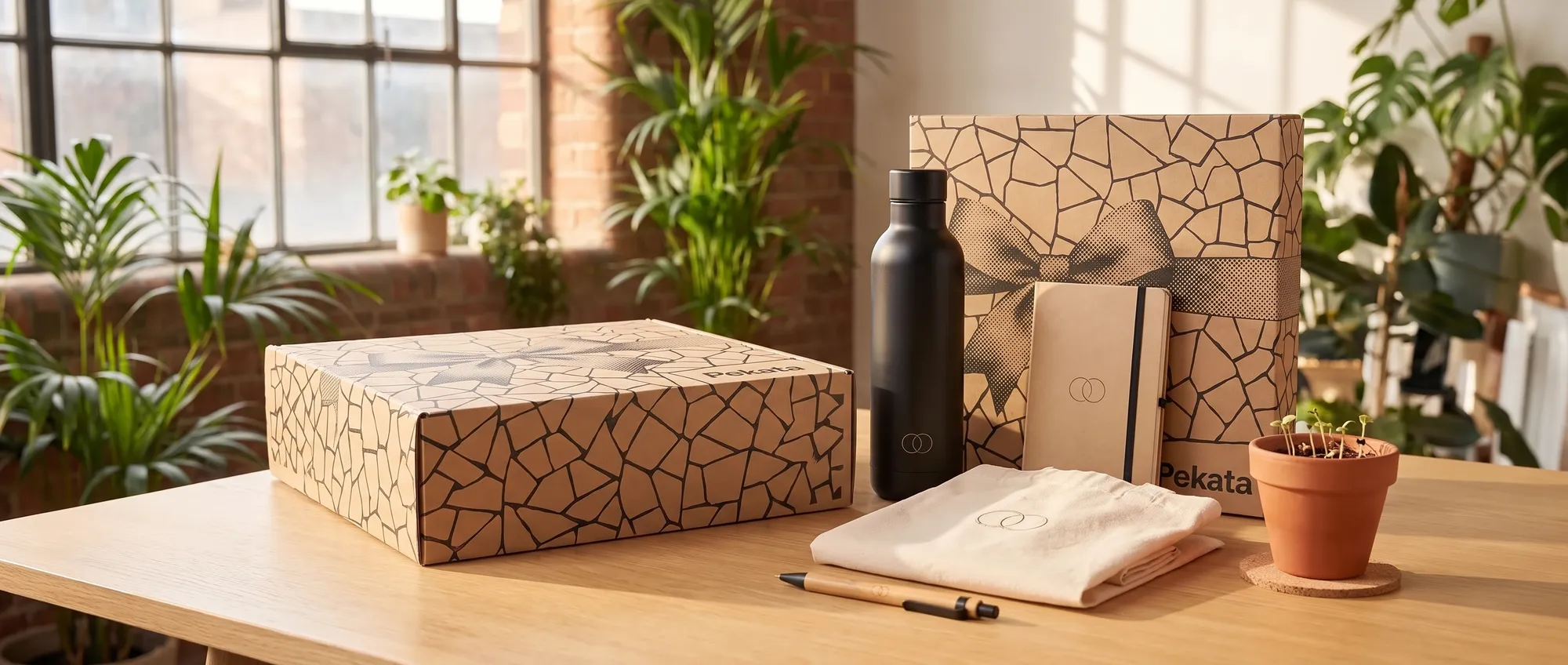
Sustainable Means It Doesn't Get Thrown Away
Eco-friendly merchandise is often labelled with green tags on disposable products. The real sustainability of an eco-friendly promotional gift is determined in two places: the item's lifespan and the number of excess units produced. A steel bottle used for five years is more sustainable than a biodegradable pen lost in a month.
That's why our sustainable merchandise is chosen for durability and traceable materials — stainless steel, certified organic cotton, fabrics from recycled bottles (RPET), recycled paper, bamboo, and FSC wood — and produced from 25 units: just what you need, with no stock ending up in a bin. This is what sets sustainable corporate gifts apart from a green catalogue with a minimum order of hundreds of units.
Eco-friendly Merchandise That Delivers
- Bottles, thermoses, and stainless steel mugs with laser-engraved logos: replace plastic bottles throughout the office. Models and branding in customised bottles and mugs for companies.
- Truly personalised eco-friendly bags: organic cotton tote bags and RPET backpacks, with water-based ink branding. Other formats in customised backpacks and bags for companies.
- Customised notebooks and journals for companies made from recycled or stone paper, bamboo pens, pencils with seeds to plant when finished, and customised RPET umbrellas.
- Organic cotton and recycled polyester textiles with embroidered logos, size chosen by each person to avoid excess production. Also suitable for sustainable uniforms: more in customised workwear.
- Living details: pots with aromatic seeds, grow kits, and desk plants with your brand.
Eco-friendly Promotional Gifts Without Contradictions
There are three ways an eco-friendly promotional gift stops being eco-friendly: wrapping it in plastic, overproducing, and sending it twice. We assemble the items in the Pekata kraft cardboard box with tissue paper, produce the exact units needed, and deliver once to the right place — either at the office or each person's home, who also chooses their size or colour.
If you're looking for a complete corporate gift with sustainable criteria — gourmet from local producers, donations from the portal, invoicing through Special Employment Centres — it's in sustainable corporate gifts; and the rest of the catalogue with your logo, in merchandise for companies.
How to Brand the Logo Without Damaging the Item
- Laser engraving on steel, bamboo and wood: no inks, no wear, and the logo lasts as long as the item does.
- Screen printing with water-based inks on textiles and bags: PVC-free, in one or two colours.
- Embroidery on organic cotton t-shirts, polos and sweatshirts: thread, not plastic, and withstands washing.
- Single-colour printing on recycled paper for notebooks, labels and the box card.
- No production surplus: each item is marked when ordered, with the size or colour chosen by each person.
Guide Prices for Eco-Friendly Merchandise
| Item | Material | Marking | Guide Price / unit |
|---|---|---|---|
| 500 ml Thermal Bottle | Stainless Steel | Laser Engraving | €12 – €25 |
| Tote Bag | Organic Cotton | 1-Colour Water-Based Screen Printing | €6 – €10 |
| A5 Notebook | Recycled Paper, Kraft Cover | 1-Colour Printing | €6 – €12 |
| Pen | Bamboo | Laser Engraving | €2 – €4 |
| T-Shirt | Organic Cotton | Chest Embroidery | €14 – €20 |
| Pot with Seeds | Ceramic or Kraft Cardboard | Printed Label | €3 – €6 |
Guide prices, with logo applied, VAT not included. Production starts from 25 units: you pay for what is delivered; with volume, the price per piece decreases.
Frequently asked questions
What Makes a Merchandise Item Eco-friendly?
Materials of recycled or certified origin (RPET, GOTS organic cotton, FSC wood), a long lifespan, and minimal packaging. We consider all three and reject items that only meet the label.
Is Sustainable Merchandise More Expensive?
Piece by piece, sustainable merchandise costs between 10% and 30% more than its conventional equivalent. Per campaign, it often turns out the same or cheaper, because you produce only the units that are delivered, with none left over in storage.
Can You Document the Materials for Our Sustainability Report?
Yes: we provide the material, certifications, and origin of each item, along with details of units produced and delivered per campaign.
Is there a minimum order for eco-friendly merchandise?
Yes: 25 units per reference. You order the items to be delivered, and each person selects their size or colour on the portal. The price per piece improves with quantity.
Which marking technique is the most sustainable?
Laser engraving, because it uses no inks and doesn't wear out; it's suitable for steel, bamboo and wood. For textiles and organic cotton bags, we use water-based screen printing or embroidery, avoiding vinyls and plastisol inks.